Aero Precision M4E1: Buttoning Up the Back End
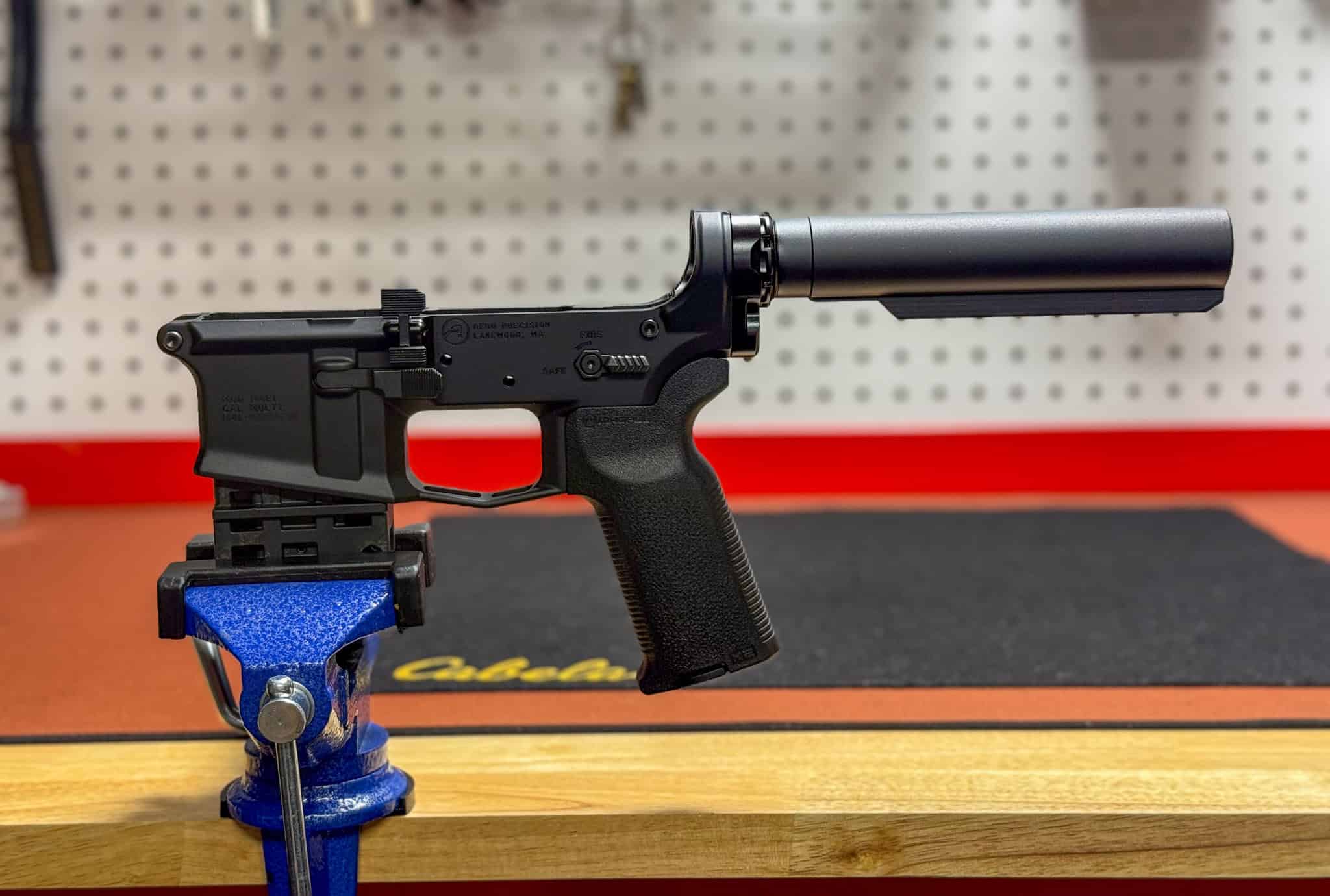
In the last installment, found here, we took a look at the CMMG Zeroed LPK for a standard AR lower. Find a more detailed review of the Aero Precision M4E1 stripped lower here.
To recap, the CMMG LPK includes all the small parts and controls you need to finish off a stripped lower… as any good LPK should. We’ve now installed the magazine catch/release and safety selector, both of which are ambidextrous, and also the enhanced bolt release, takedown and pivot pins, and the buffer retainer.
CMMG Zeroed LPKs are available with trigger components and a pistol grip. Ours is the base LPK that includes the enhanced controls and all necessary springs and detents, but no trigger group or grip. We’re skipping the trigger for now and are weighing a few different options to complete the lower build.
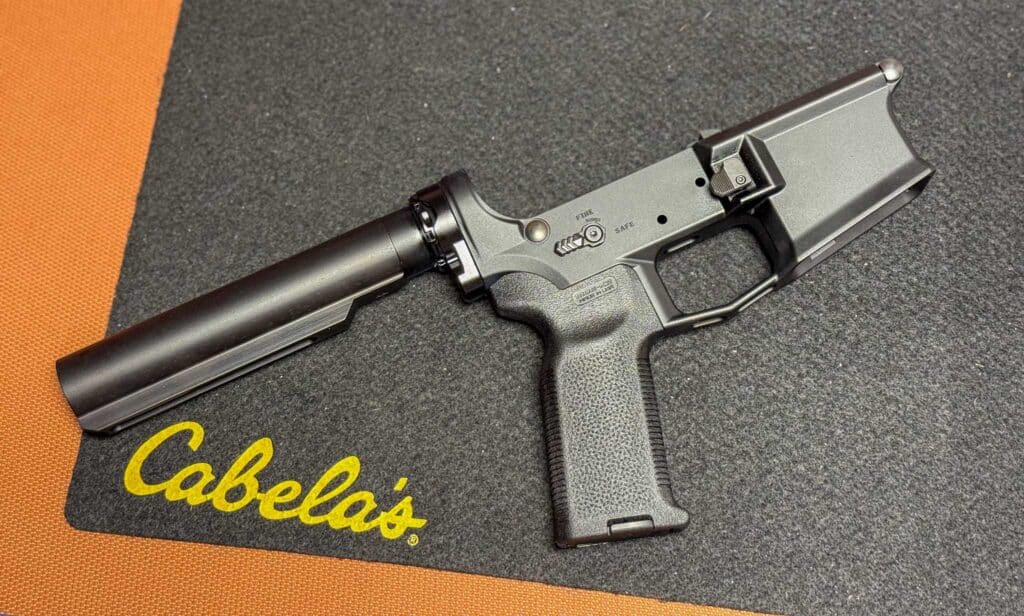

The buffer retainer should be installed in concert with the buffer tube, and we happened to have just such a tube waiting in the wings: an Aero Precision enhanced carbine tube that, like the low-profile lower, had been residing in the parts bin for some time now.
Compared to a standard tube design, the Aero enhanced buffer tube has features like BCG support extensions and a ramped design at the bottom of the threaded end to help streamline installation, as well as drain holes drilled through the buttstock position notches in case your lower becomes swamped in water. (You never know; it could happen.)
To fasten the buffer tube to the receiver we used a Fortis K1 System end plate/castle nut. There is some debate as to whether or not the end plate should be staked to the nut in order to keep it from working loose during operation.
I’ve never experienced a properly torqued castle nut working loose, but then again I’ve never subjected a rifle to what I’d consider heavy use. Whatever the case, Fortis offers two different end plate/castle nut systems, K1 and K2, designed to effectively lock the components in place without the need for staking.
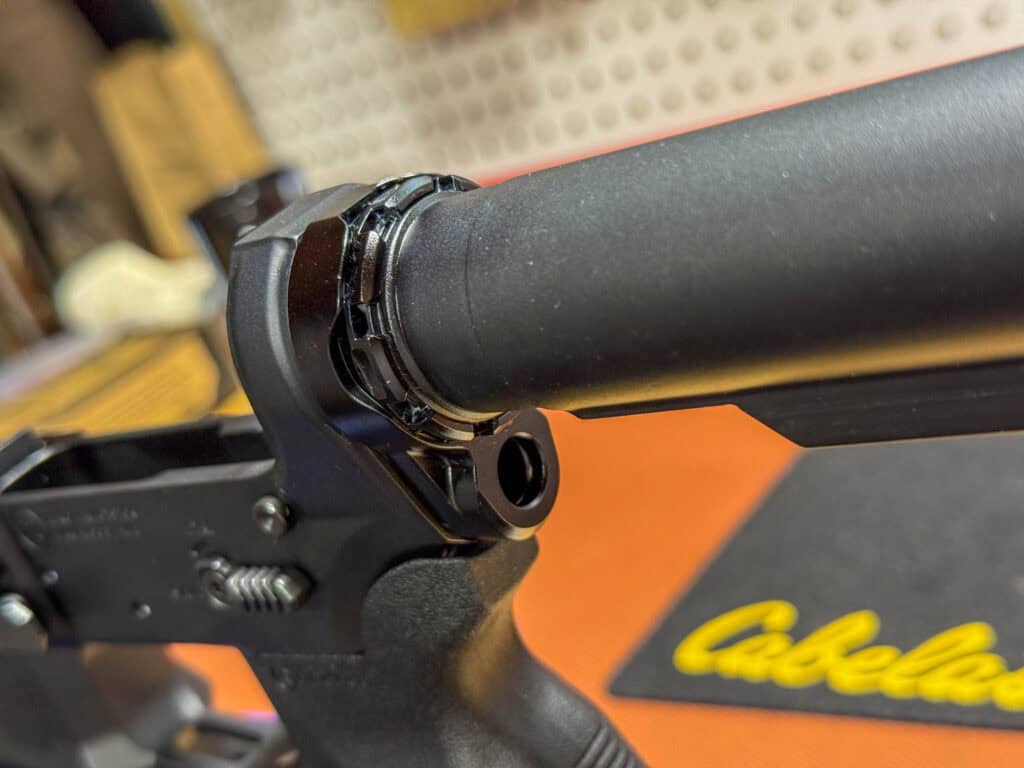
The system used here, K1, uses a tapered castle nut that’s precisely machined to seal with the enhanced end plate, which is flared slightly to accommodate the specialized nut and includes a QD socket at the bottom.
Fortis’s other option, the K2 system, uses a ratcheting locking lever to lock the nut into a matching K2 end plate, which also uses an extended design and QD socket. The top-of-the-line Fortis Contractor Series components, K1 and K2, are available in either black nitride or Fortis’s brassy, case-hardened finish.
The final components for now, minus trigger group, are a standard carbine spring and 3-oz. buffer from Odin Works that will be installed at final assembly—once the upper assembly is worked out and ready to go—and a Magpul MOE K2 pistol grip.
The K2 is Magpul’s more upright pistol grip with a reduced angle compared to the standard MOE. I’d have preferred an MOE+ with the cushier rubberized overmold, but this one, which is standard Magpul hard polymer, is what was in stock at the time and so this is the one that got installed.
As it sits, this lower assembly is nearly ready to rock, but there are a few changes we’ve already begun mulling. Obviously the trigger will need to be installed, and a Magpul B.A.D. lever (“battery assist device”) is another longtime resident of the parts bin I’ve been waiting to put to use, having installed one on another build and finding it handy to have.
Installing the lever here would require swapping the CMMG bolt release for a standard mil unit, which the B.A.D. is designed to fit neatly over. It would also require the port-side magazine catch/release be changed out for a standard, non-ambi catch. So it’s something that’s being considered but has not yet been put to practice.
In the meantime, here’s a few details on the Fortis locking end plate systems:
Aero Precision
M4E1 “Low Profile” stripped lower, enhanced carbine buffer tube
aeroprecision.com
CMMG
Zeroed lower parts kit
cmmg.com
Fortis Mfg.
Contractor Series K1 end plate/castle nut
fortismfg.com
Magpul Industries
MOE-K2 pistol grip
magpul.com
Odin Works
Carbine buffer/spring
odinworks.com