Best 5 Adjustable Gas Blocks
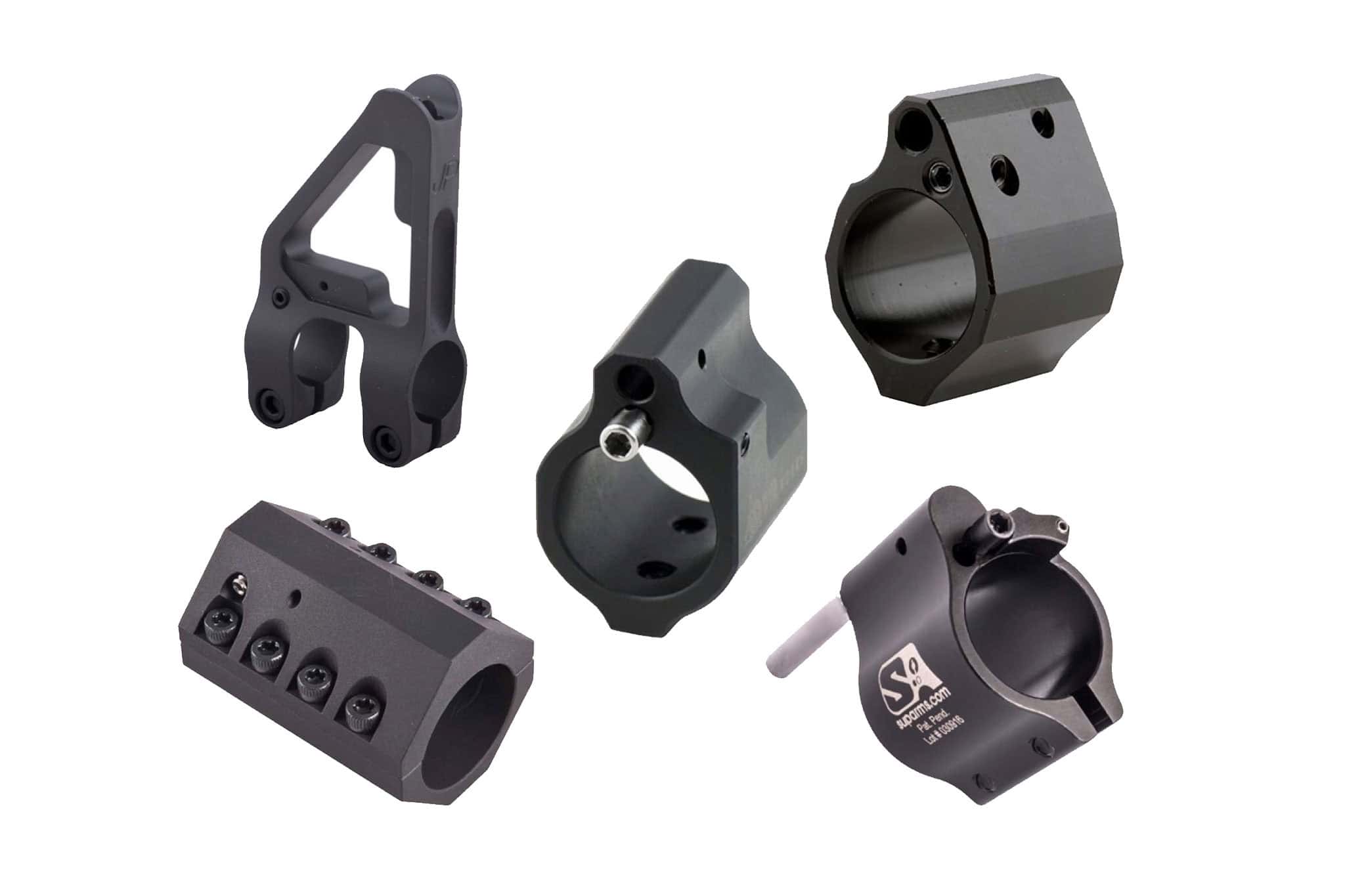
Building an AR platform rifle appears to be easy at first look. It is essentially a tinker toy for adults.
While you are collecting your parts one of the easiest to overlook is the gas block.
The Gas block is the interface between the barrel and the gas tube. The gas block may look as simple as a band around the barrel to a triangular front sight base. It regulates the amount of gas coming out of the barrel and directs the gas into the gas tube, then to the bolt carrier group. And for something as simple as it looks the decision you make determines how your rifle functions. The gas block is the part you buy after your receivers when you decide what kind of AR you want to build.

Decide first, do I want an adjustable gas block or not?
Do you want less recoil?
Will you be running a suppressor, subsonic ammunition, differing bullet types ranging from light for caliber, to heavy?
If the answers to any of these are yes, an adjustable gas block is in your future.
It is easy to fail to think your project all the way through and buy parts you don’t need. It can be as simple as buying a gas block you like, then finding your barrel is too big or small to fit. Barrels typically come in sizes ranging from .625 to .936. The most common diameter, .750 medium contour at the gas port. Sometimes what you want doesn’t fit together. It requires defining what you want to do, and then buy the parts.
Types and materials
There are two basic types of gas blocks. Slip on, machined as a 1-piece housing. Pins or screws hold these; and clamp on which usually uses two screws to maintain tension.
The most common material is steel and stainless steel. There are some made from aluminum and of course Titanium which is much more expensive.

I am also not aware of any titanium adjustable gas blocks.
Aluminum, in contact with high-temperature gas wears quickly. If you are building a rifle and need to remove grams to make weight for match regulations, then possibly it’s an option for you.
I know of no aluminum adjustable gas blocks I’d recommend.
I’m going to list the four best adjustable gas blocks, why I like them and why you should consider them for your project.
This is a clamp on gas block, and if you are going to use a suppressor, this is the gas block to use.
Unlike most other gas blocks, this one vents excess gas out the front of the block, not over-gassing the receiver and battering the working parts of the upper. Doing this allows you to meter just enough gas to drive the bolt carrier. In turn, this reduces felt recoil.
Honestly, in 35 years of using this platform, I’ve never considered recoil to be a problem.
The gas adjustment screw doesn’t contact the hot gasses; therefore, it doesn’t contaminate or seize from high-temperature gas.
In case you get too aggressive with the wrench there is a safety feature so you can’t back the screw out, an excellent idea for people like me.
And it’s a low profile, so it fits under most handguards.
SBR and AR pistols, this will fix over gassing problems and not vent hot gas into your face out the ejection port of your upper receiver.
It isn’t perfect, but for what it’s designed for I don’t know of better.

I like the Seekins Precision block. It is made of steel, is a slip-on type and held in place with two screws on the bottom. When you order your barrel have the maker mill a flat spot for the screws to butt against; you’ll never have a problem when the barrel/gas block heats up during long strings of fire.
It uses a brass friction screw, so no thread locker is necessary and won’t mar the adjustment screw.
It’s another low-profile type and fits under most handguards.
Check out more in our Blog section.
Want more posts like this one? Subscribe to Guns & Tactics to receive email updates and special offers direct to your inbox!
Social Links:
– The views and opinions expressed on this web site are solely those of the original authors and contributors. These views and opinions do not necessarily represent those of Guns & Tactics, the administrative staff, and/or any/all contributors to this site.
– Affiliate Disclaimer: Guns and Tactics is reader/viewer supported. This post may contain affiliate links and we may earn a small commission when you click on the links at no additional cost to you. As an Amazon Affiliate I earn from qualifying purchases.