Geissele Automatics Reaction Rod Review: A Must-Have Tool for AR Assembly and Maintenance
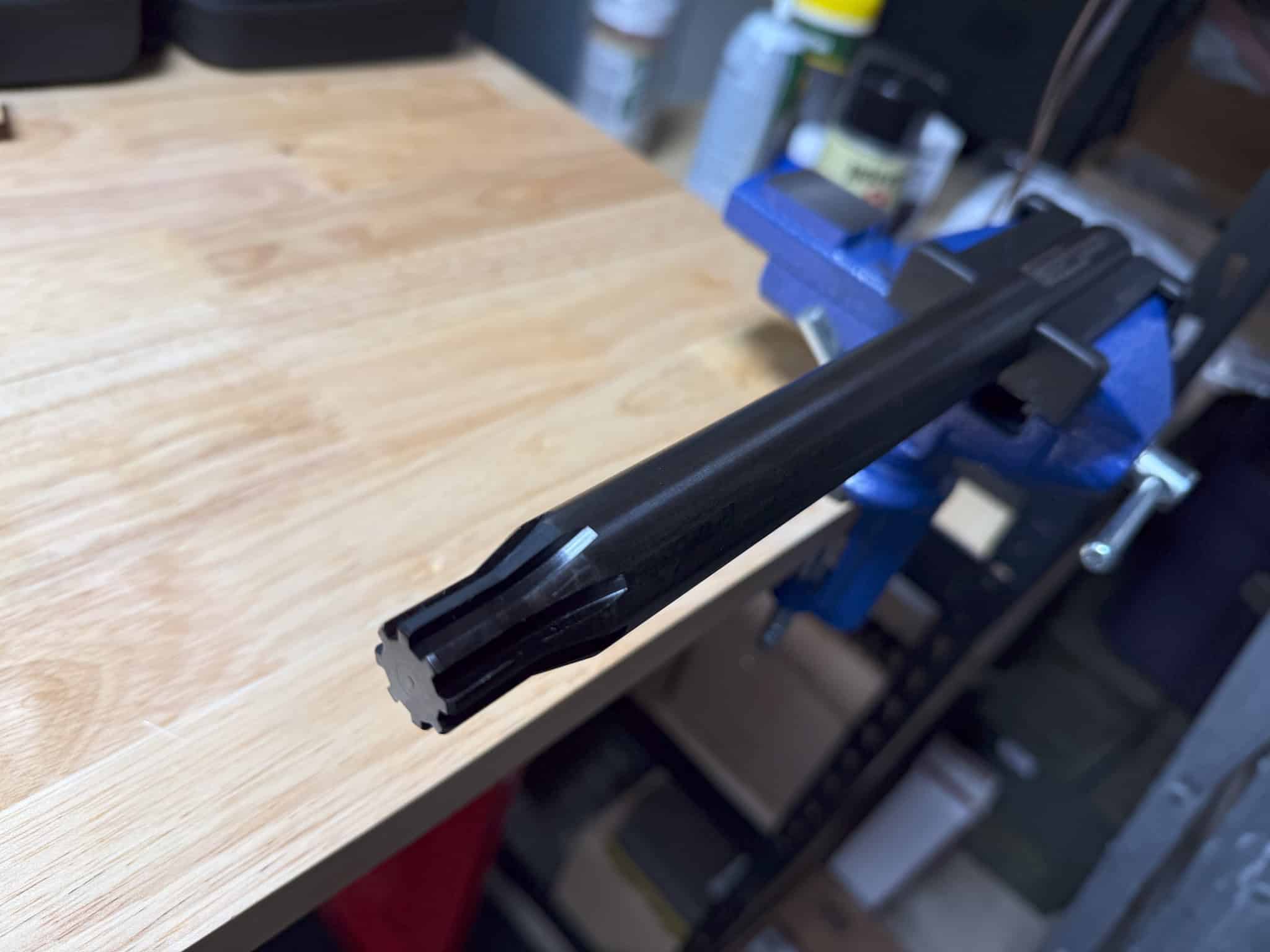
Our typical method for working on an AR upper or lower is mounting the gun on a vise block via a general-use bench vise. While this works for most assembly, disassembly and maintenance operations, when it comes to applying torque on the barrel elements—specifically loosening especially tight barrel nuts and/or installing or removing muzzle devices—we’ve come to believe there’s a better way. Enter the reaction rod.
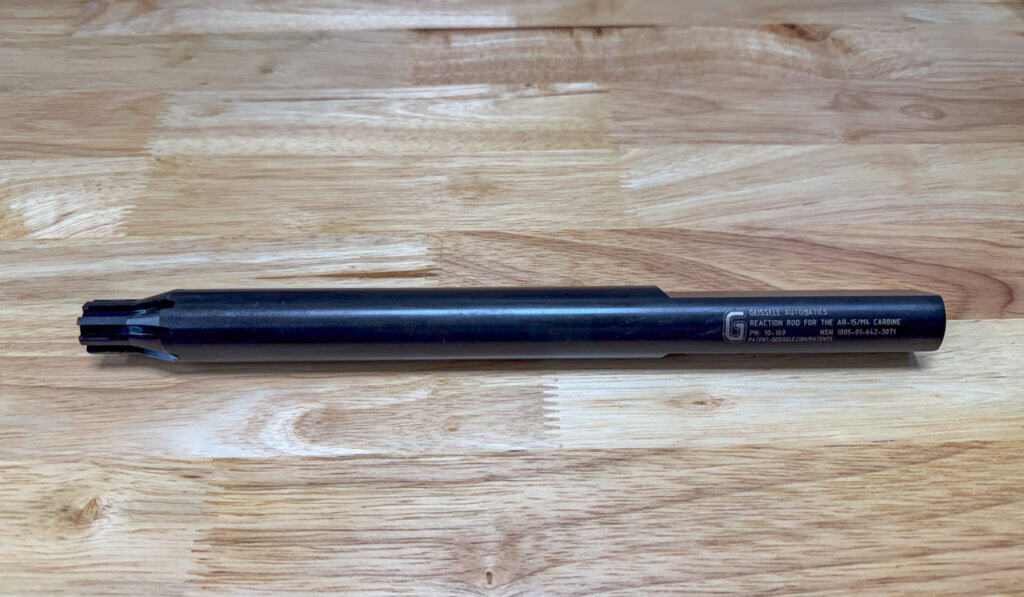
Ours is made by Geissele Automatics, but similar tools are available from other sources including Midwest Industries and Real Avid.
A reaction rod interfaces with the barrel itself to mount the upper receiver, rather than relying on a vise block to mount the mated upper and lower or a polymer or aluminum upper-specific block that holds the upper receiver via pins installed through the takedown lugs.
One end of the rod features eight radially symmetric splines or lugs that plug directly into the star chamber on the barrel extension where it fits into the threaded extension on the upper receiver. The main body of the rod then slides into and supports the receiver in its entirety, while the remaining flat portion extends out the back where it can be secured in the jaws of your handy bench vise.
Securing the upper assembly in this way channels any applied torque force directly into the in-line assembly of the barrel and the upper and in turn places it in-line with the vise jaws. This spares the upper’s takedown lugs, and the tiny slot in the upper barrel extension that accepts the barrel’s indexing pin, from bearing the brunt of lateral force that could potentially damage any of these features.
While the amount of torque applied by installing a muzzle device or barrel nut might not necessarily be a cause for alarm—typically between 30 and 40 ft-lb, what we’ve heard some refer to as “barely more than finger-tight”—the reaction rod goes beyond a luxury and becomes a more necessary tool when you’re applying a lot more force to a component, such as a stuck, frozen or over-torqued muzzle device or barrel nut… one treated with red Loctite, for example.
Our rod is the standard version with no bells or whistles—just a precisely machined bar of 4140 chrome-moly that’s finished to an exact diameter, enabling it to enter the receiver smoothly without any play or wobble. Geissele also offers a “Super” version that allows the user to pre-load the barrel nut extension to the rod’s lugs, eliminating any movement before applying further torque to the target component.
The standard 5.56/.223 rod costs about a hundred bucks. The aforementioned Super Reaction Rod goes for $175, and Geissele also offers a version for 7.62/.308 if you’re dealing with a large-frame application.
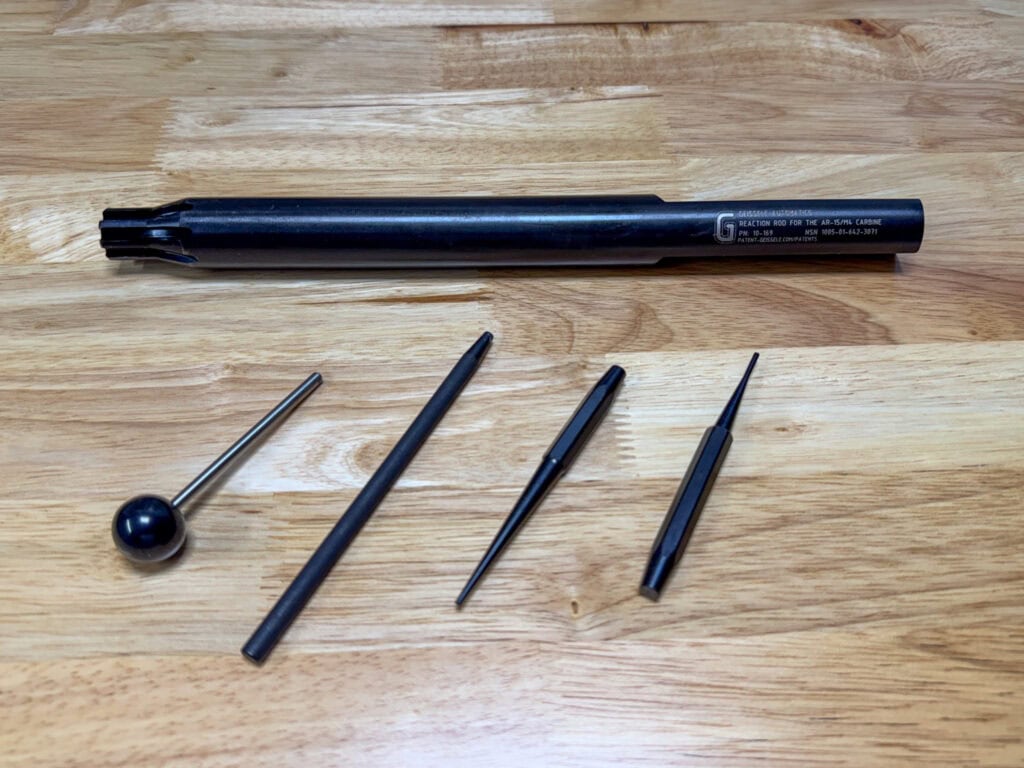
We should note that Geissele also offers the standard reaction rod as part of an “Armorer’s Package” that also includes a couple other specialty items: a trigger fitting pin, which is a useful thing to have when installing “loose” (i.e., not drop-in) trigger groups—Geissele or otherwise—and a gas block roll pin tool and pin punch set, which we have not yet used. But we figure, better to have it and not need it than the other way around. The complete package will run you about $130.
Geissele Automatics
Reaction Rod 5.56/.223
MSRP: $99
URL: geissele.com