Cobalt Kinetics—Evolving America’s Rifle
If the 1911 is America’s handgun, there is no doubt the AR-15 is our nation’s rifle. Sometimes misunderstood, often maligned by mainstream media, the AR-15 is the closest thing our society has to the minuteman muskets of Revolutionary times.
After nearly 60 years of uninterrupted service in our nation’s military and untold millions of them in the gun safes of citizens from sea to shining sea, the AR has been pushed to its mechanical limits as a lead delivery system. Everything from gas port sizes to triggers to calibers has been tinkered with and re-engineered ad infinitum, turning this rifle into a modular platform to meet any need or fill any desire for the American rifleman, be they armed professional or prepared citizen.
For all of the options available on the current market, much of what we see is variation, as opposed to true innovation. Components like muzzle devices, barrels, bolt carrier groups, and triggers can all be swapped with basic tools. While they can offer improvements in performance, they don’t really alter the original system much at all.

Enter Cobalt Kinetics, a company that appeared almost overnight with some truly significant changes to the AR operating system and manual of arms not seen, or even attempted, previously. Their aptly-named Evolution rifle truly lived up to its name, introducing some real and genuine changes to how the rifle operated.
In addition to being a lightweight, fast-shooting rifle with space-age looks, the Evolve introduced some new mechanics. Most notably, the Evolve featured a truly novel reloading system known as the CARS—Cobalt Advantage Reloading System—which automatically ejected an empty mag after the last round was fired. It also automatically sent the bolt forward upon inserting a fresh magazine.
Cobalt also introduced a separate system known as the “dual-drop” bolt release. While the Evolution featured a slick-sided upper, the dual-drop system featured forward assist buttons on both sides of the receiver that doubled as bolt-release buttons. When reloading on bolt-lock, you could tap either of the forward assists to send the bolt home on the first round.
Fast-forward to mid-2020, when the company changed ownership and changed direction. While The Evolution and its sister models had been squarely aimed at the high-speed competition market with their seconds-shaving mechanics, the new Cobalt Kinetics quickly strove to reposition itself as a viable contender for technologically advanced duty guns.
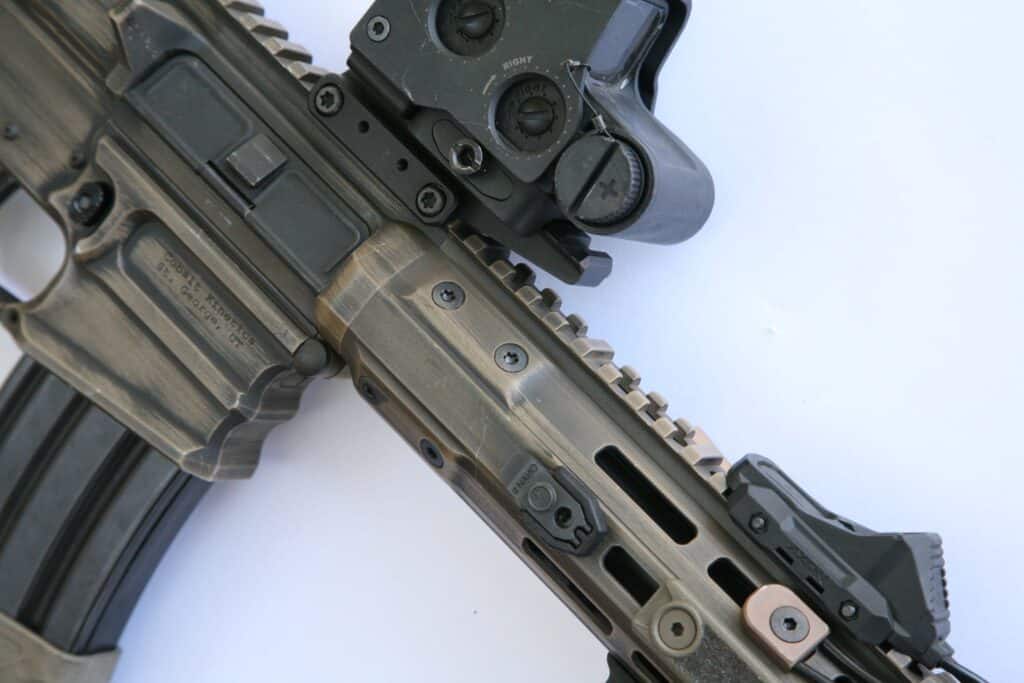
Both the CARS and Dual-Drop systems were removed from the catalog on account of their mechanical complexity. (The CARS system added more than 20 individual components to the standard AR lower receiver.) The new name of the game would now be rugged advancements that added real-world value for serious end users. Thus the CK-Pro, and its value-minded sister the CK-Lite, were born.
The new Cobalt chassis was built around several primary features. The front end of the gun was beefed up significantly in both the handguard and its attachment system. This offers several benefits. First, the increased diameter allows more airflow between handguard and barrel for decreased heat transfer during sustained firing.
The increased diameter also comes with increased thickness of the handguard tube itself for more secure mounting of accessories, which is particularly useful when mounting an IR laser that’s required to hold a zero while often living all the way out at the end of the rifle.
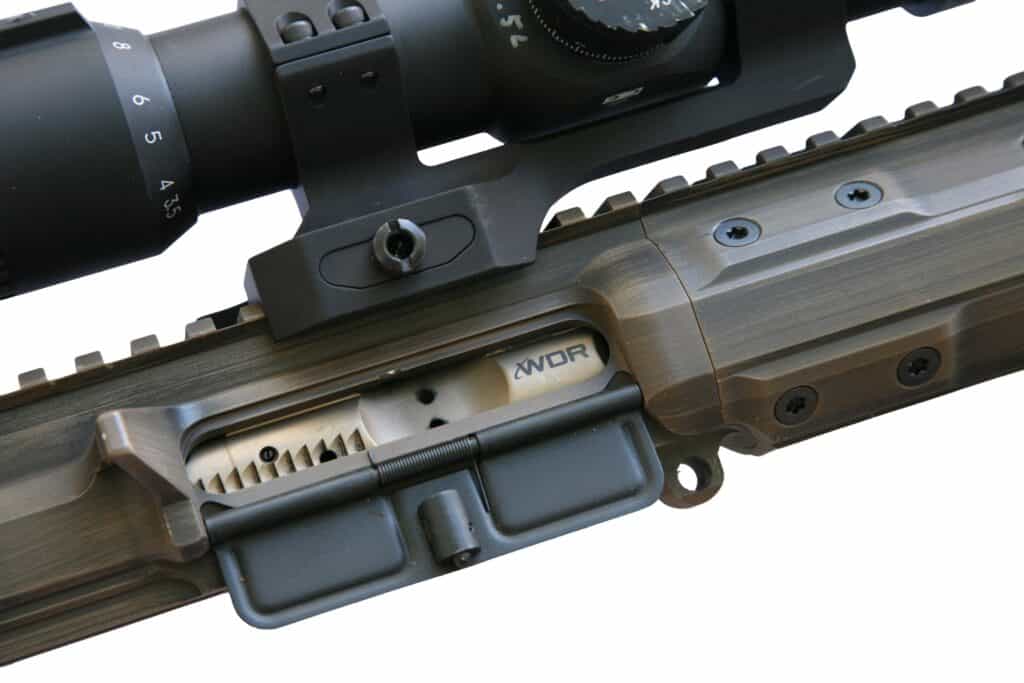
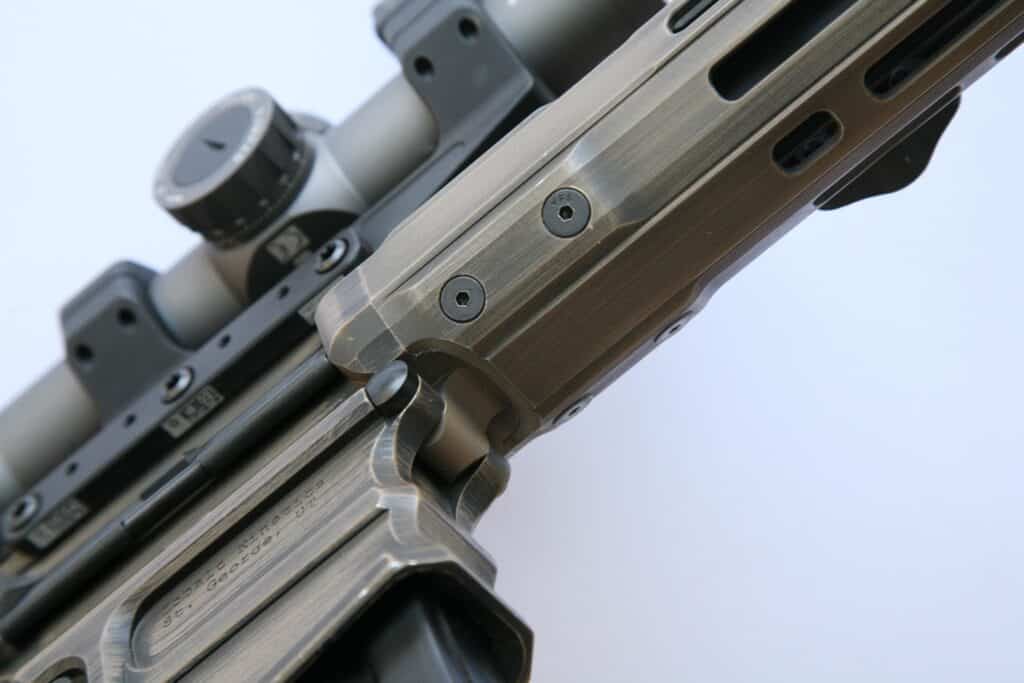
Then there’s the attachment system itself, which uses a proprietary two-inch-long threaded barrel nut and eight smaller screws. While most handguards simply clamp down and may use small anti-rotation tabs to keep the handguard properly oriented, the Cobalt upper receiver features an extension, machined into the upper itself, that accepts those eight additional screws.
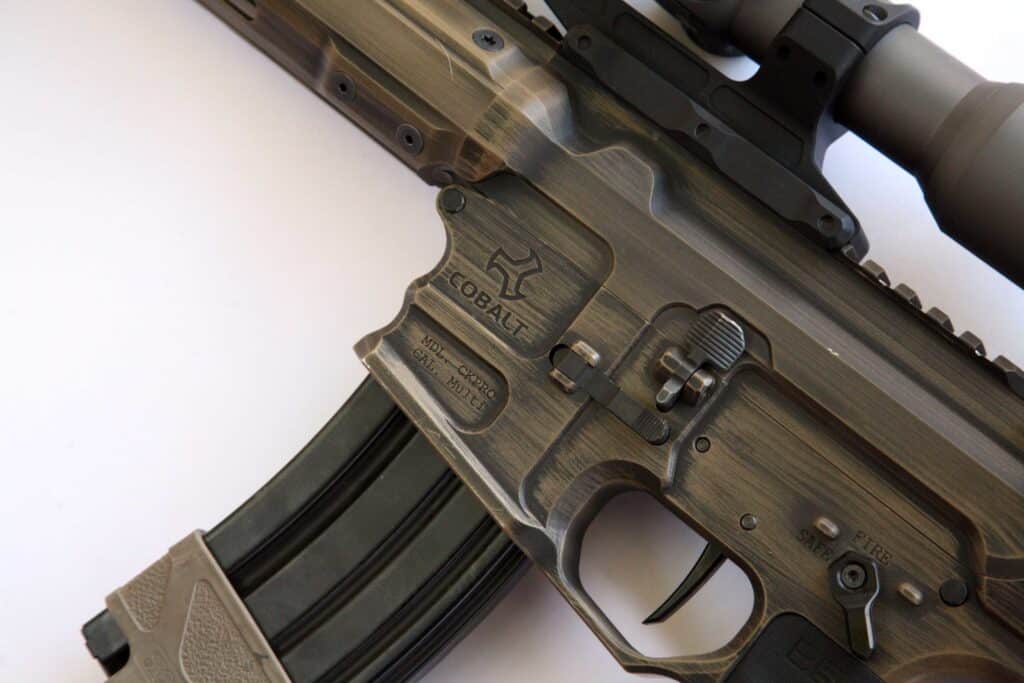
The result is a complete upper assembly that performs like a monolithic handguard without the additional complexity that comes with a single extrusion. Namely, you can still remove the handguard to change barrels, gas blocks, or gas tubes in the same way you would with any other AR. But this unique mating system is much stronger and more rigid so, if you are running larger scopes that have to bridge the 12 o’clock rail, the possibility of zero shift is greatly reduced.
At the opposite end is Cobalt’s CK-A5 buffer system. This system is based on the VLTOR A5 buffer system, designed at the request of the U.S. Marine Corps, that departs from the standard carbine spring-and-buffer, instead pairing a longer intermediate buffer with a rifle-length spring. Distributing the recoil over more spring coils smooths out the rifles felt recoil impulse, making it a darling of duty users and anyone who wants a softer-shooting AR.
Cobalt’s variation of this system adds a raised and beveled “dome” to the top of the buffer that locks into the back of the BCG. This forces the buffer and BCG to move as a single unit under recoil for a more consistent impulse and elimination of carrier tilt inside the buffer tube.
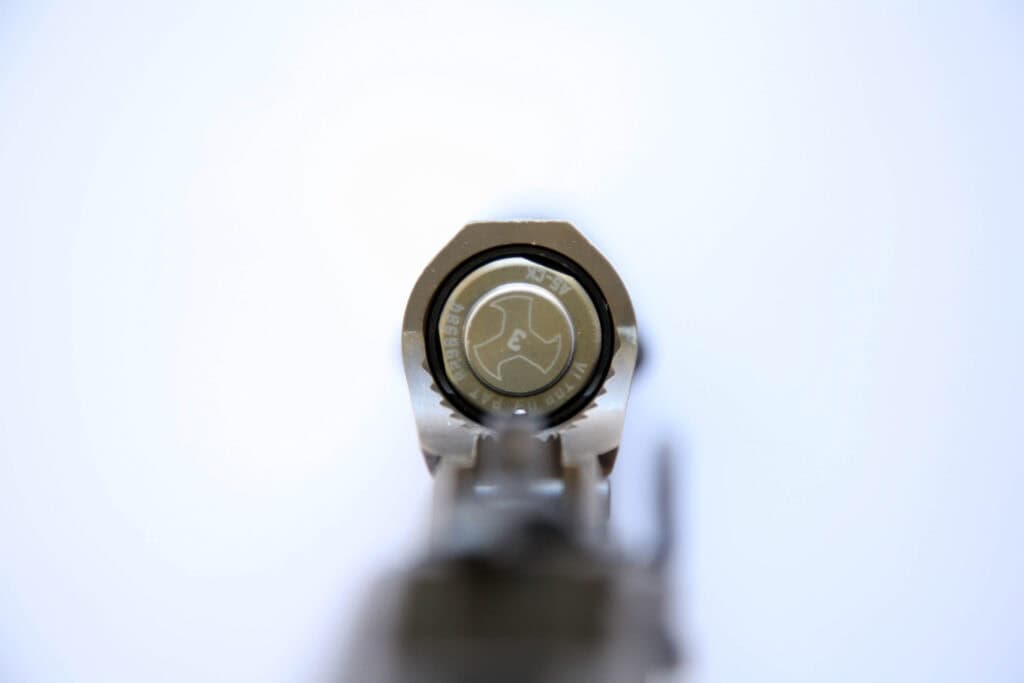
But Cobalt didn’t stop there. They also sell a polymer buffer sleeve that can be fit over the buffer. This “pre-staging” device permits the use of any standard carbine spring in their system. While not explicitly necessary, this opens up a degree of back-end tuning not available with the standard A5 system. With the addition of this sleeve, you can pair any CK-A5 buffer with your preferred carbine-length spring to tune the rifle’s cycling without the need for adjustable gas blocks, which are prone to carbon locking and gas leakage with prolonged use.
Our Builds
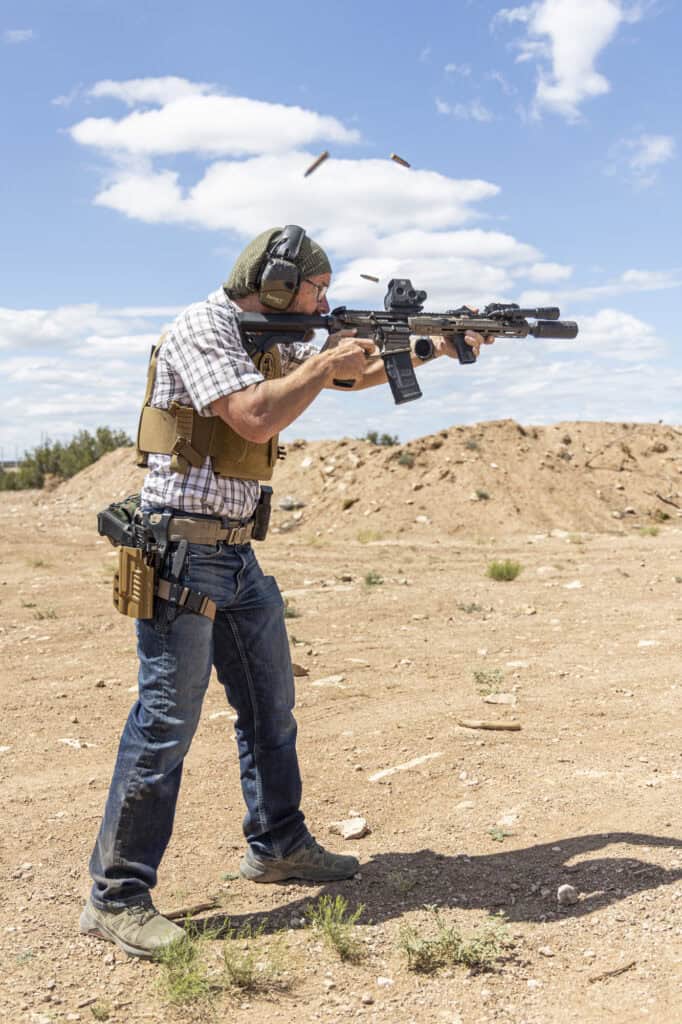
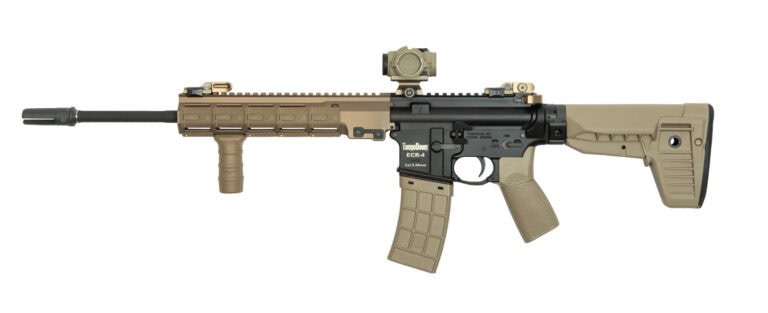
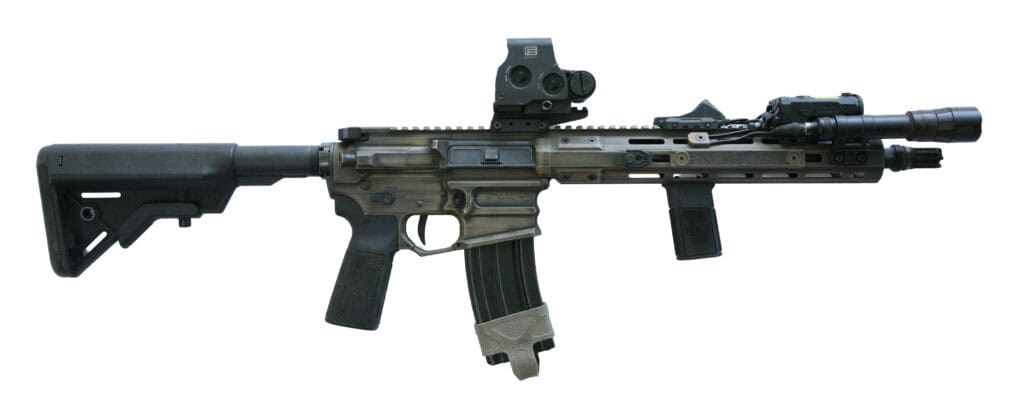
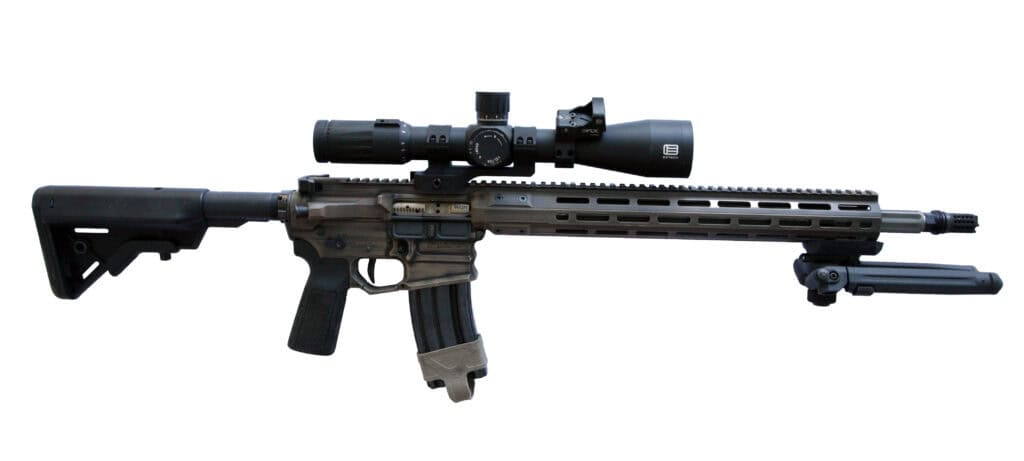
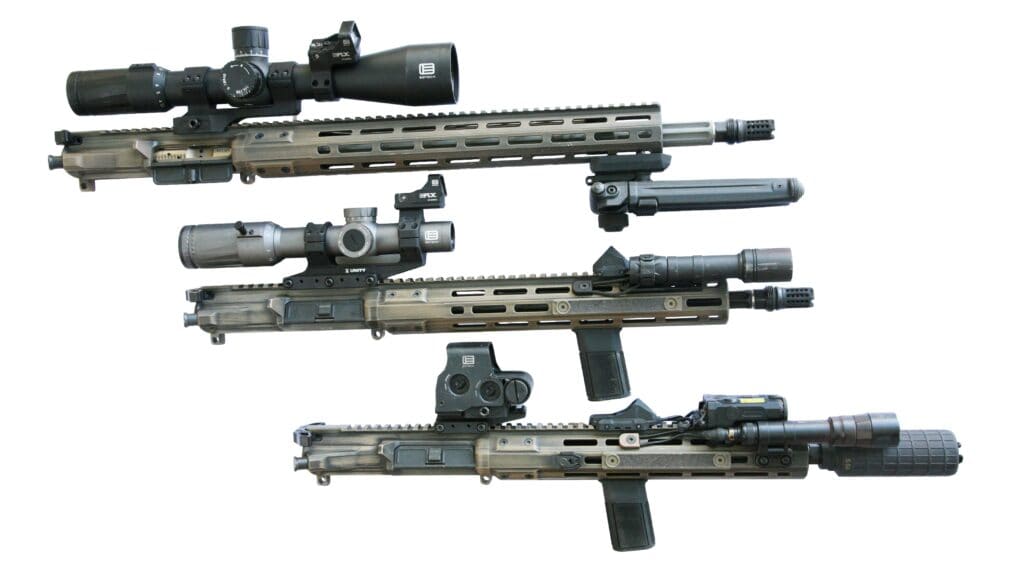
We’ve built out two and a half Cobalt rifles for testing here. The first uses a Form 1 lower with two uppers: 12.5- and 18-inch barrels, respectively. The idea here was to have a single lower with uppers that could be swapped for close-range engagements, including low-light/no-light shooting, and a DMR/SPR type upper with a scope for longer-range shooting.

The 12.5 barrel is from X2 DevGroup’s Trident line. While X2 is not a household name, they’ve spent years quietly innovating on DoD projects in the small-arms space. Their Trident barrels are 416R stainless finished in black nitride, with deep flutes running the length of the barrel to reduce weight and increase stiffness. In addition to the increased rigidity and weight reduction, this fluting pattern also serves to disperse heat away from the front of the chamber.

The gas block journal on Trident barrels features two deep-set screw detents, eliminating the need for a cross pin that exerts radial tension around the barrel which may potentially affect accuracy. These barrels come with a factory 1MOA guarantee using match-grade ammunition.

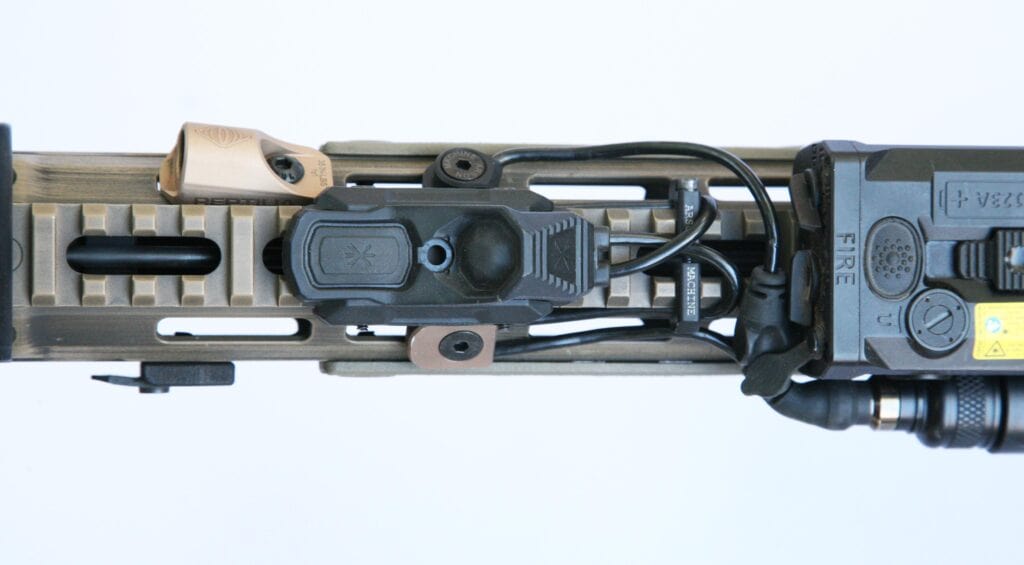
The 12.5 specifically runs a unique “Carbine+1” gas system meant to reduce recoil while still maximizing reliability. As the name implies, the system is carbine length plus one inch. The optic is an EOTech XPS-3 on a Unity Tactical FAST riser, combined with their Axon remote switch that runs both the SureFire DF Turbo light as well as the Holosun IRIS laser/illuminator. Other accessories include Walker Defense BCG and NILE grip panels, Arson Machine cable management devices, and a Reptilia Corp sling swivel.
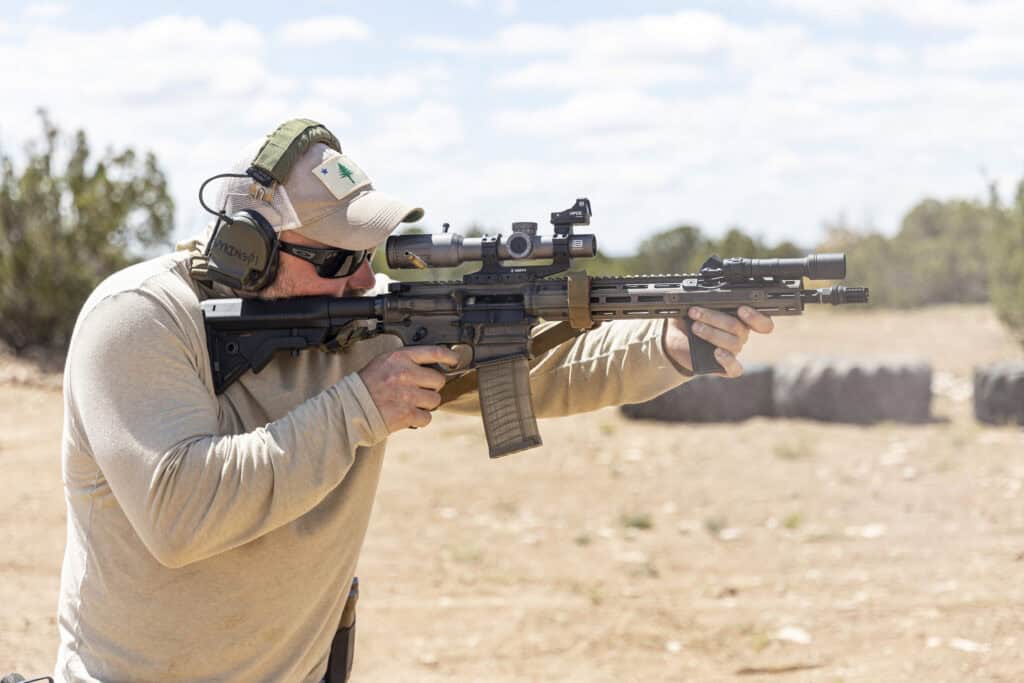
The 18-inch barrel is from Noveske’s DDF line, DDF for Deep Disruptive Fluting. These barrels were designed by Noveske’s Combat Systems Development & Support division, which specializes in rifle-centric projects for the U.S. government. The DDF barrel features a whopping .980 diameter that runs almost the full length of the barrel, minus a proprietary gas block journal of .923, still a good size larger than the industry standard journal of .750 and requiring a special gas block that ships pre-attached to the barrel.
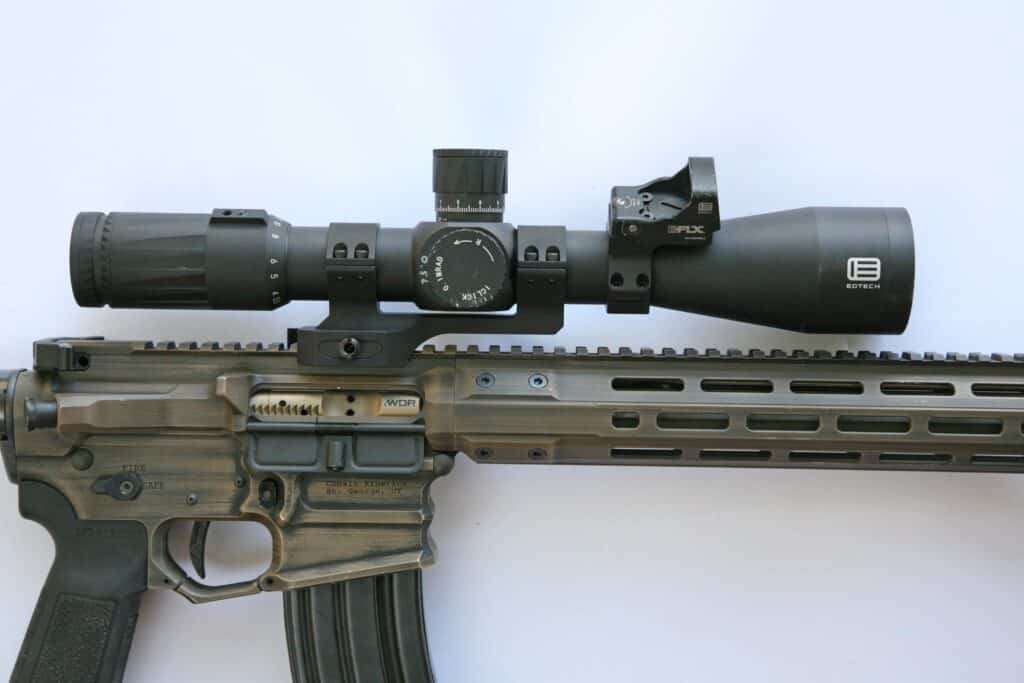
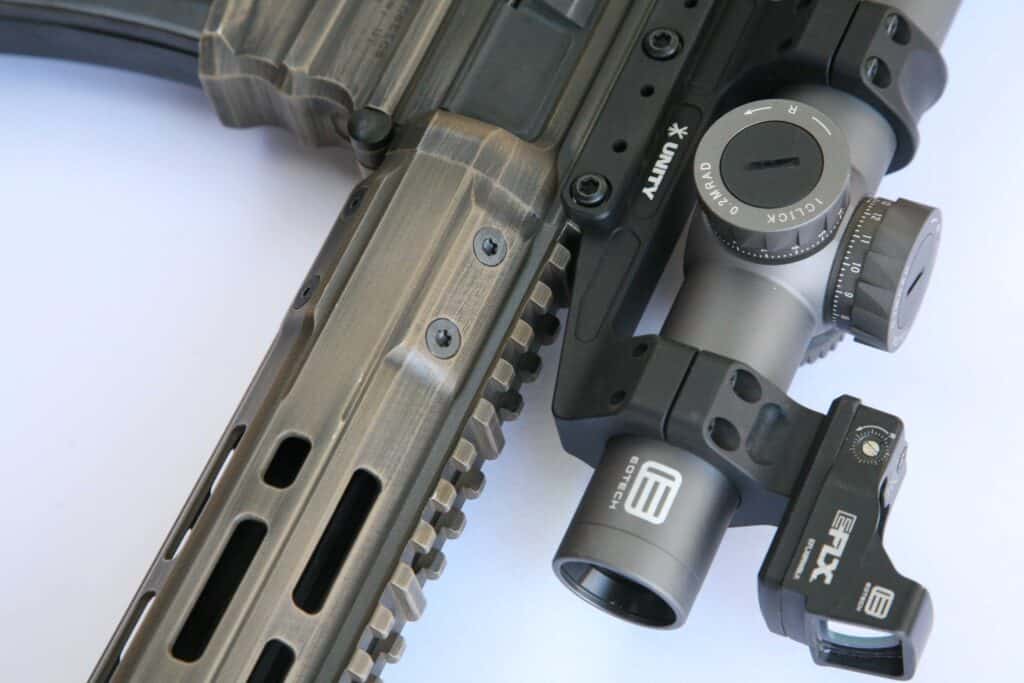
The purpose of this configuration, according to Noveske, was “…in gun-speak: to increase the bullet’s efficiency in forward motion by reducing barrel harmonics.” The 18-inch version features a rifle-length gas system, 1:7 twist, and 5.56mm NATO-spec chamber. To take full advantage of the barrel’s capability, we topped it with an EOTech Vudu 3.5-18x first focal plane scope in a factory cantilever mount. For quick sight-ins or fast closer shots, we also added an EFLX red dot mounted to the scope via a Reptilia ROF adapter that clamps directly to the optic tube. The only other accessory we added was a Magpul bipod.
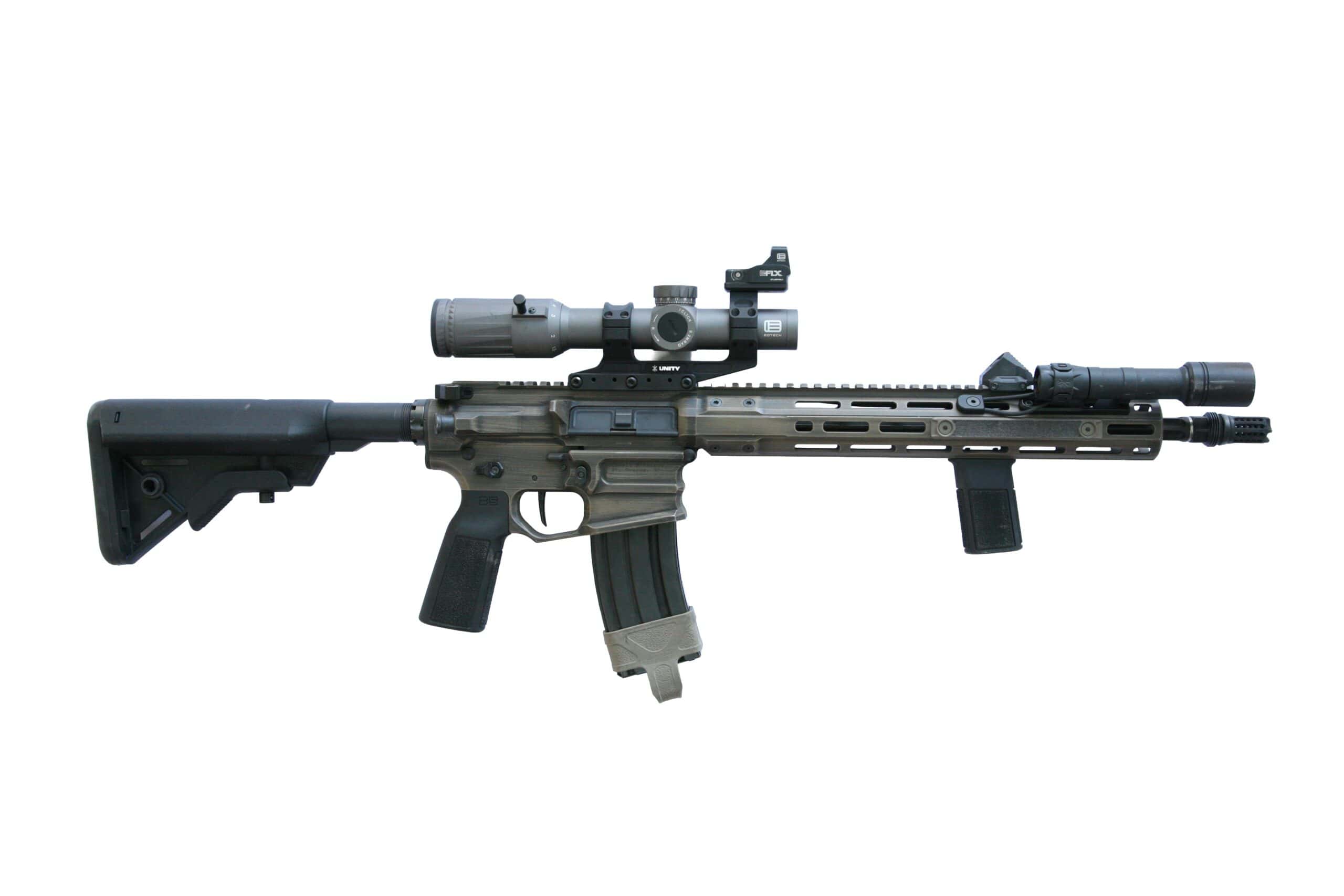
The other rifle is built on Cobalt’s newest lower, which features fully ambidextrous fire controls including magazine and bolt releases on both sides. That lower is mated to another X2 Trident barrel, this one a 14.5-inch mid-length barrel sharing all of the shame advancements as its shorter brother discussed above. Since we wanted this build to serve as a well-rounded general-purpose rifle, we paired it to a Vudu 1-6x first focal plane LPVO with EFLX red dot riding in a Unity Recce mount. Night vision capability wasn’t deemed necessary, but we felt a strong white light is an essential carbine accessory. The one seen here comes from Malkoff Devices, running off a Unity Axon and GasCap.
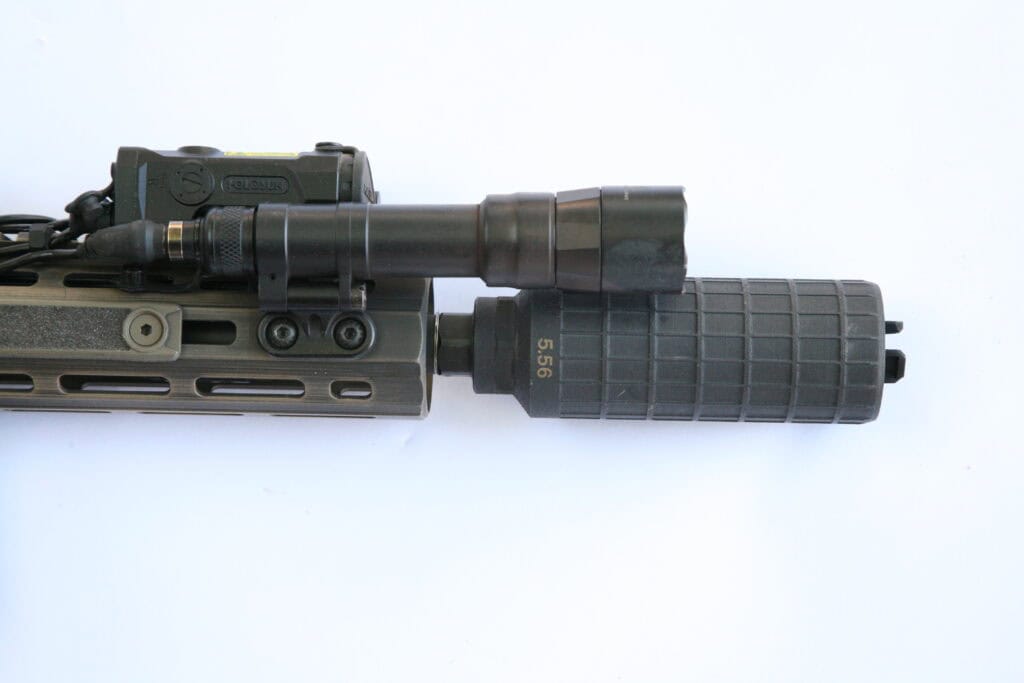
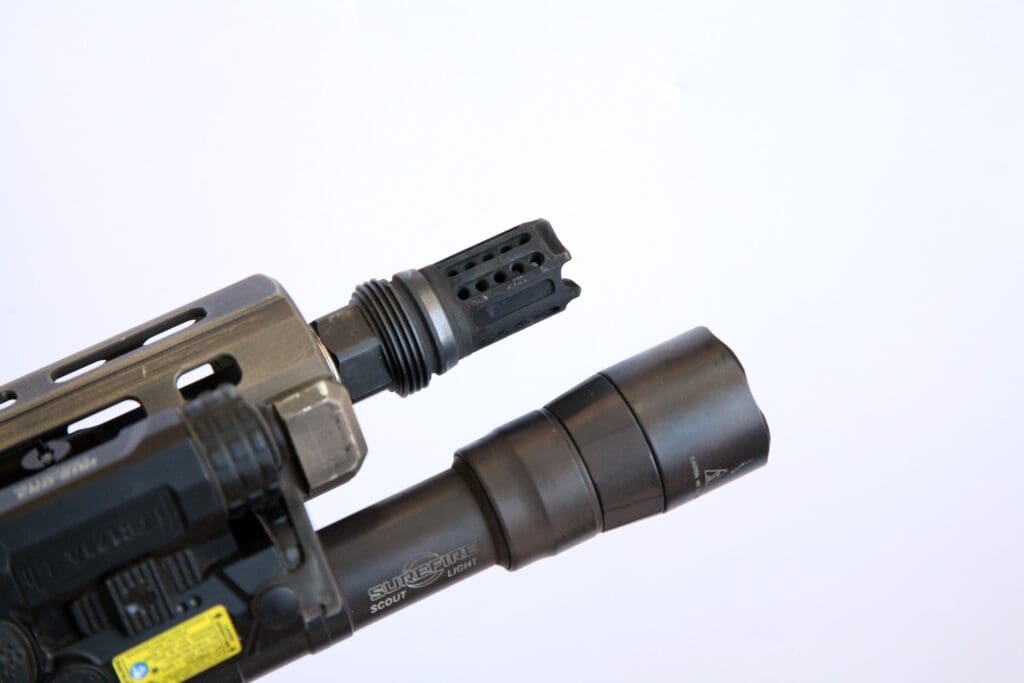
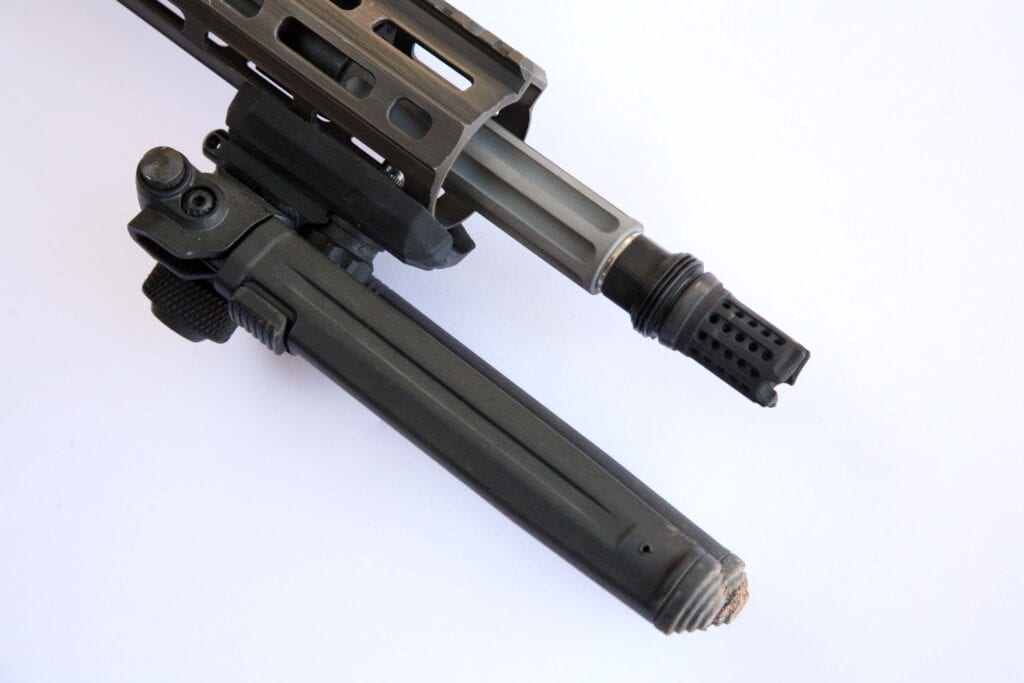
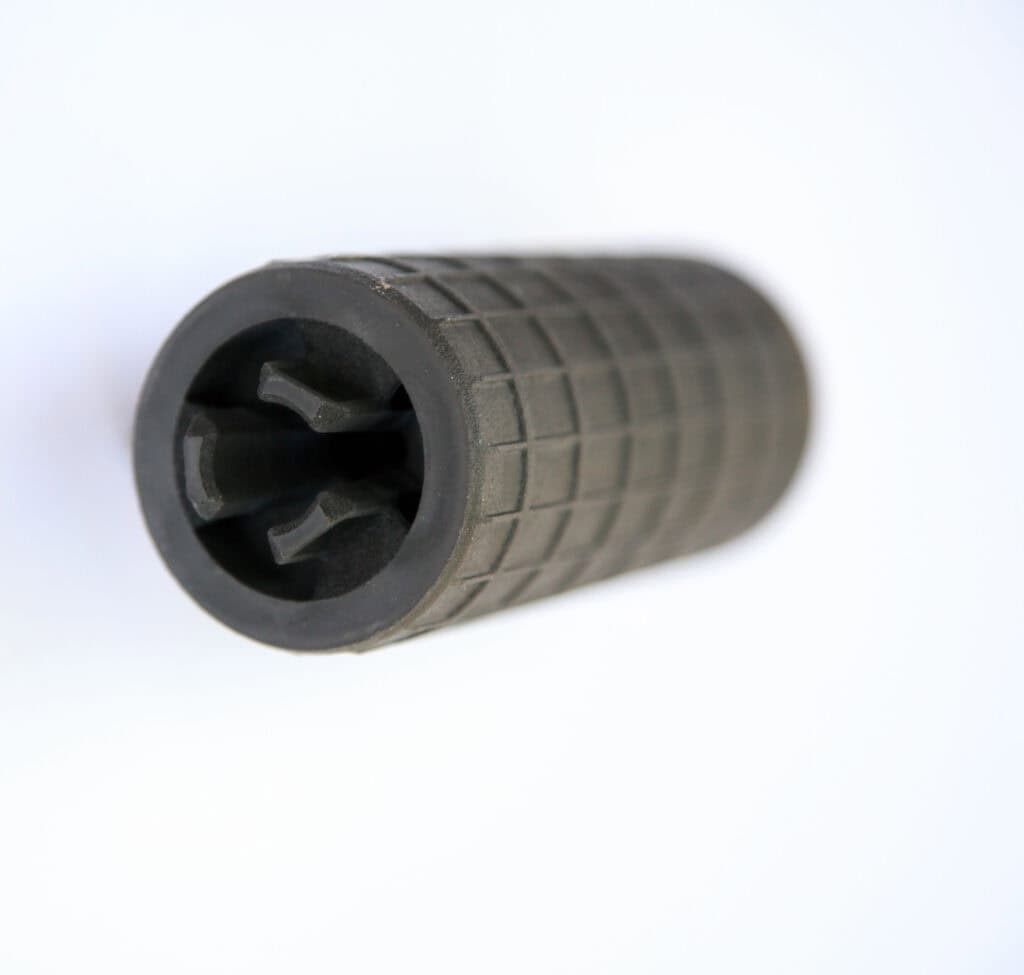
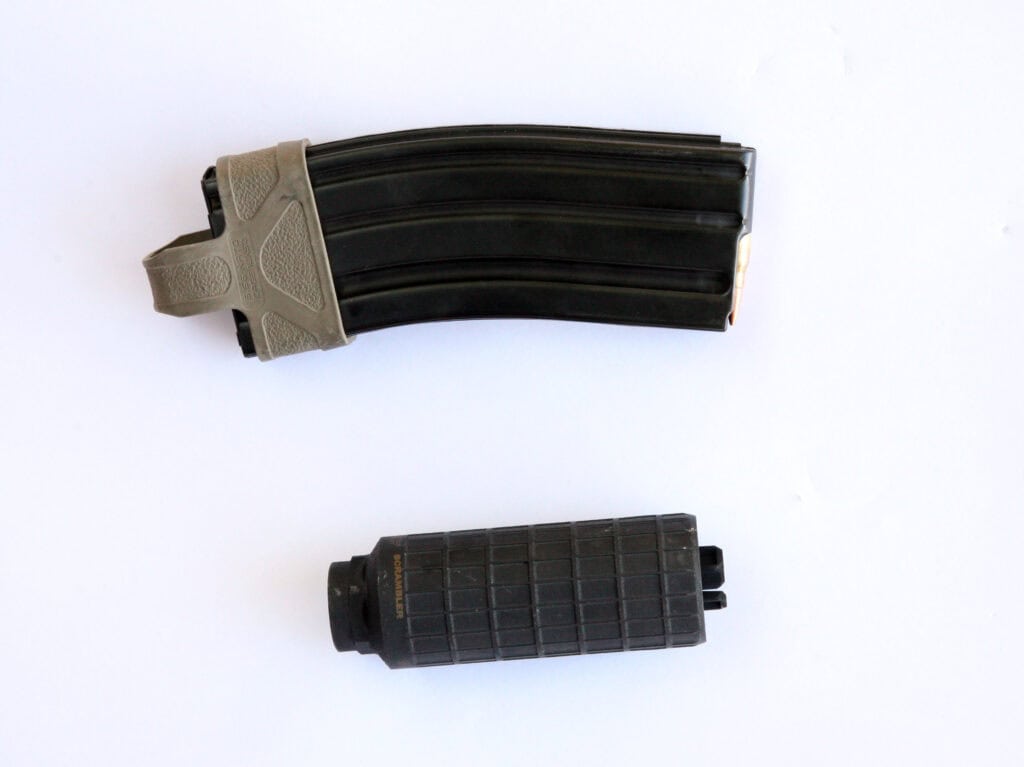
All three uppers are tipped with Cobalt’s Reduced Concussion Brakes, or RCBs, which use a series of small holes to vent gas and short flash-control tines to take the edge off of muzzle flash. These brakes are also counter-threaded for Cobalt’s Scrambler suppressor—a 3D-printed titanium suppressor that performs miraculously for its size. Coming in at less than 5 inches and lighter than 5 ounces, the Scrambler includes flash-reduced tines and Cobalt’s Vent-to-Atmosphere design to reduce backpressure into the receiver.
Performance
We packed up all three of these configurations and headed to Sierra 1, a training site in central Arizona owned and operated by BRVO Tactical. The founders of a BRVO Tactical, a retired SWAT sniper and an active-duty Special Forces NCO, have been quietly building a rifleman’s playground in the high desert of the Copper State. The facility sits at approximately 6,500 feet above sea level and currently has targets as far as 1,450 yards, with more distance coming.
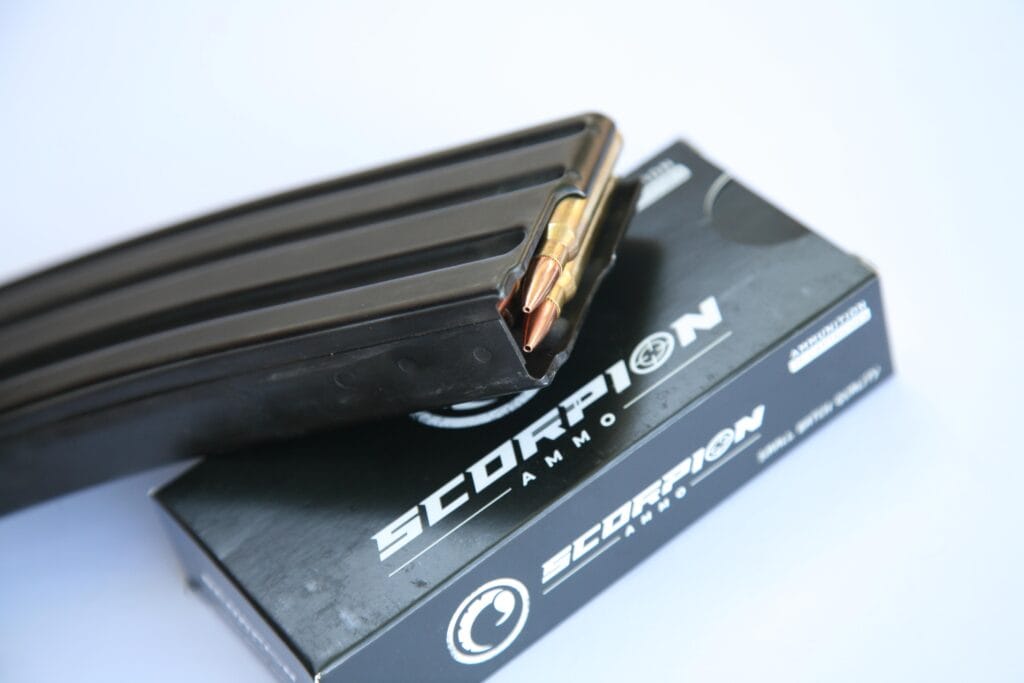
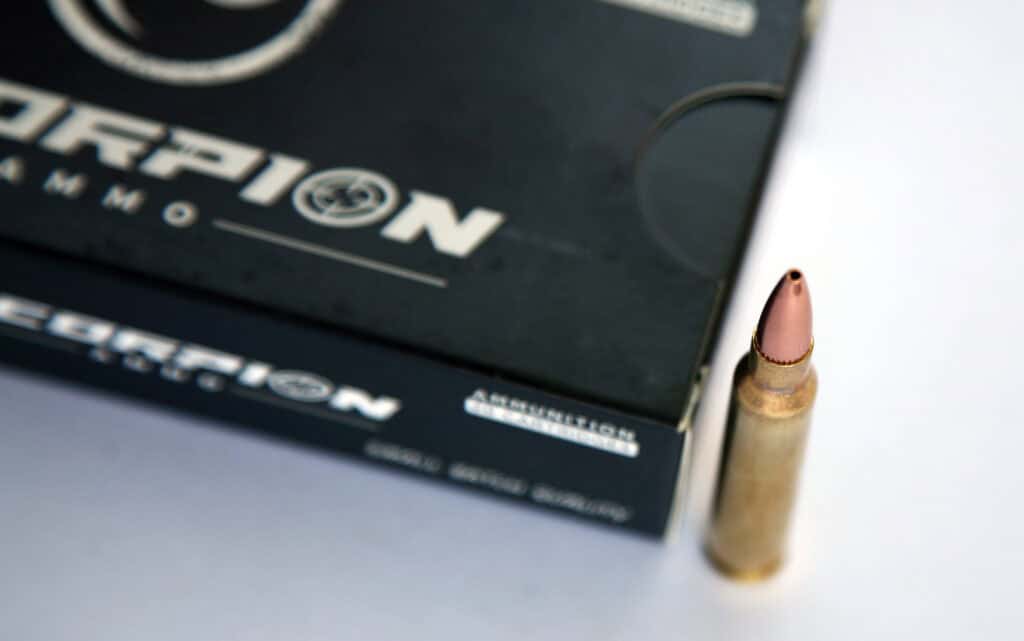
The highlight of our performance testing came from the Noveske-barreled, 18-inch SPR upper. We zeroed the 3.5-18x Vudu at 100 yards with Scorpion Ammo’s 77-grain BTHP. Once zeroed in, we walked this upper out until we were hitting steel at 750 yards. We found this ammo to be consistent and it produced great velocity. Both X2 barrels ran out to nearly 500 yards without issue. While there will certainly be a difference in energy delivered to target, the barrel length differences between our SBR upper and our pin-and-weld upper was not noticeable when it came to how easily we could make these hits. Every configuration of Cobalt upper and lower performed without a single hitch.
The beauty of the current AR-15 market is that we’ve reached the point where endurance testing and 100-yard groups no longer make for good reading because those results are so consistent as to be boring. But even in a market where the vast majority of ARs can achieve reliability and accuracy that were noteworthy not that long ago, Cobalt Kinetics has pushed the mechanical effectiveness of the AR chassis even further into the future without losing anything that makes it great.
Combined with the inherent, repeatable accuracy in modern barrel technology from the likes of Noveske and X2 DevGroup, America’s rifle continues to perform in almost any configuration for almost any task.
Text and Images by Tom Marshall